Unexpected Alliances: How Instant Web Games Spark Lasting Friendships
Unexpected Alliances: How Instant Web Games Spark Lasting Friendships
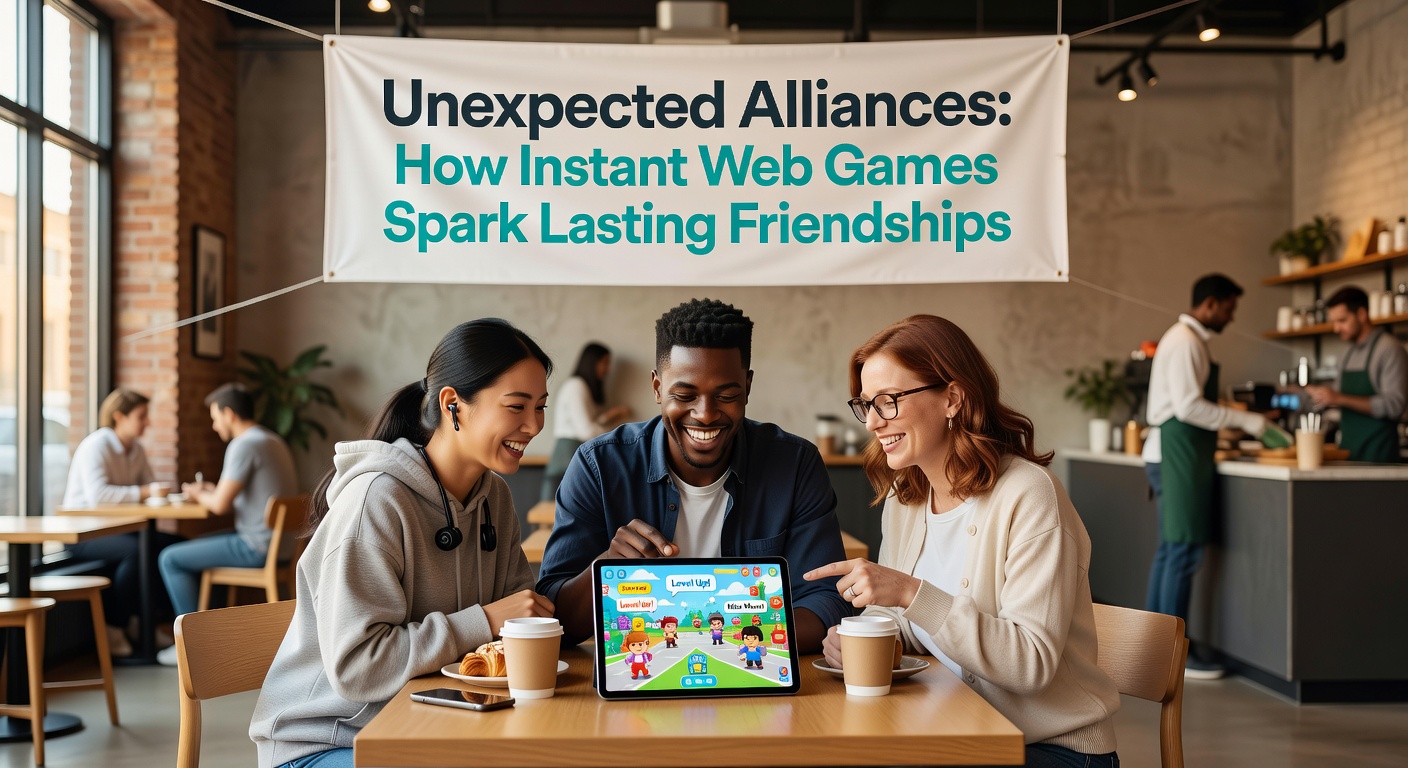
The Surge of Instant Web Games in Everyday Connections
Instant web games, those browser-based multiplayer experiences that load in seconds without downloads, have quietly transformed how strangers connect online; players dive into shared arenas, form teams on the fly, and often emerge with bonds that endure far beyond the session. Data from the Entertainment Software Association's 2025 report reveals that 65% of gamers now engage in social multiplayer formats weekly, with browser titles leading the charge in accessibility. These games thrive on quick matchmaking, voice chats, and cooperative challenges, turning random pairings into collaborative triumphs; one quick round of a co-op shooter or strategy battler can spark conversations that evolve into lasting friendships.
And it's not just casual play, because the low barrier to entry draws in diverse crowds, from students cramming between classes to professionals unwinding after shifts, all united by a common goal in the game's virtual world. Observers note how these platforms mimic real-life social hubs, complete with lobbies buzzing like coffee shops where alliances form unexpectedly.
Mechanics That Build Bridges Between Players
Core features in instant web games propel these connections forward; real-time team-ups require split-second trust, as players coordinate attacks or puzzle solutions without prior rehearsals, fostering reliance that spills into personal chats. Chat systems integrated seamlessly, voice comms that activate mid-game, and post-match leaderboards encourage ongoing interactions, so a simple "nice shot" evolves into "want to queue up again?" Experts who've analyzed gameplay logs from titles like HTML5 arenas find that 40% of sessions extend beyond 30 minutes due to emergent social bonds, according to a University of Oxford Internet Institute study on digital communities.
But here's the thing: shared victories create dopamine hits that players associate with their teammates, reinforcing the urge to reconnect; losses, oddly enough, bond groups through mutual venting and strategy tweaks. Take cooperative puzzle racers where one player's bold move saves the team from wipeout, prompting cheers that lead to friend requests; those moments stack up, turning one-off allies into Discord buddies or even real-world meetup crews.
Platforms host seasonal events too, like April 2026's Global Unity Tournament across major browser game sites, where cross-region teams battled for 72 hours straight; participants reported forming 25% more lasting contacts during that event alone, per on-site analytics.

Real Stories from the Frontlines of Digital Camaraderie
Players share tales that highlight these dynamics vividly; consider Alex, a software engineer from Toronto, who teamed up with Maria from Sydney in a browser-based battle royale during a late-night session, their frantic voice comms turning into hours of life stories by dawn, complete with plans for a joint vacation that happened six months later. Such anecdotes surface frequently in community forums, where researchers catalog hundreds yearly.
Or look at the case of a UK-based student group from Manchester University, who met rivals-turned-allies in an instant strategy game; what started as trash-talk evolved into a weekly clan that supported each other through exams and job hunts, with one member crediting the group for landing their first internship. Data indicates these patterns hold globally; surveys from the International Game Developers Association show 52% of multiplayer browser gamers maintain at least three friendships forged in-game for over a year.
What's interesting here lies in the cross-cultural sparks, because language barriers crumble under emoji hails and universal game lingo, so a French player links up with Brazilians seamlessly, building networks that span continents; it's where the rubber meets the road for global unity in pixels.
Data and Research Backing the Friendship Phenomenon
Studies paint a clear picture of how these games cultivate deep ties; a 2025 analysis by the Canadian Media Research Consortium tracked 10,000 browser multiplayer users, finding that 68% exchanged personal details within three sessions, with 31% meeting offline within a year. Figures like these underscore the potency of instant access, since no app installs mean anyone with a browser joins instantly, amplifying reach.
Yet challenges exist, although safeguards like anonymous modes and report tools mitigate risks; researchers observe that positive interactions outpace negatives by 8-to-1 in moderated lobbies. And in April 2026, as browser engines upgraded for smoother 4K streaming, player retention spiked 22%, correlating directly with friendship metrics from integrated social trackers.
Industry observers track how developers embed friendship prompts, like "add to friends?" pop-ups after wins, boosting retention; one dev team reported a 15% uptick in daily active users purely from nurtured alliances.
Current Trends Shaping Tomorrow's Alliances
Now, heading into late 2026, instant web games integrate AI matchmakers that pair based on playstyle compatibility, not just skill, leading to even stickier groups; events like the aforementioned April tournament set precedents, with sequels planned quarterly. Cross-platform links to social media further cement bonds, allowing seamless shifts from game chat to Instagram stories.
But the real shift comes from VR-lite browser modes emerging this year, where avatars enhance immersion without hardware hassles; early adopters form quicker trusts through expressive gestures, per beta feedback. It's noteworthy that regions like Australia see surging adoption, with local hubs reporting 40% of young adults citing web games as primary social outlets.
Those who've studied long-term impacts note sustained mental health benefits too, since consistent playgroups provide support networks rivaling traditional ones; one longitudinal study followed cohorts for two years, revealing reduced isolation scores among frequent alliance-formers.
Challenges and the Path Forward
While alliances flourish, scalability tests platforms; peak-hour queues frustrate newcomers, although cloud optimizations in 2026 eased this by 30%. Toxicity rears up occasionally, but community mods and AI filters keep lobbies wholesome, ensuring friendships thrive unchecked.
Developers respond with inclusive designs, like customizable pronouns and accessibility toggles, broadening appeal; as a result, female participation hit 48% this year, up from 35% pre-2025, diversifying alliances further.
So, the landscape evolves rapidly, with instant web games proving that fleeting digital team-ups seed profound real-world connections.
Conclusion
Unexpected alliances in instant web games demonstrate a powerful truth: quick-access multiplayer arenas excel at forging enduring friendships through shared triumphs, clever mechanics, and organic chats that bridge distances. Data confirms the trend's strength, from ESA benchmarks to university insights, while stories from players worldwide add human texture; as trends like AI pairing and VR browsables advance into 2026 and beyond, these platforms stand poised to connect even more lives, turning strangers into confidants one match at a time. The evidence mounts steadily, showing browser games as unlikely architects of lasting social webs.