Gridlock Echoes: How Casual Web Puzzle Mechanics Mirror Urban Traffic Optimization Models in Smart City Planning
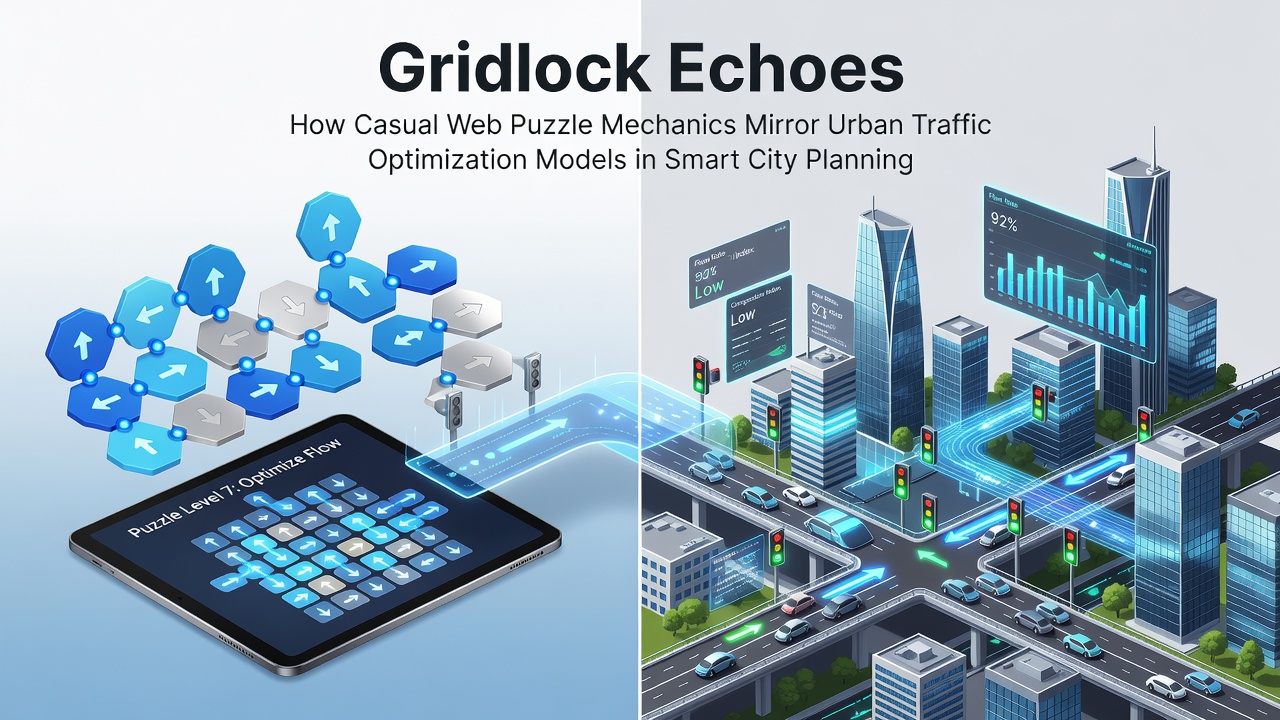
Web-based puzzle games that involve sliding vehicles through constrained grids have long required players to manage space allocation and sequential movements, and these same constraints appear in the algorithmic frameworks that govern traffic flow across smart city networks; developers who create such puzzles often rely on pathfinding routines that calculate minimal steps for clearance, while urban planners apply comparable optimization layers to reduce congestion at scale. Research from institutions tracking digital modeling techniques shows consistent overlaps in how both systems prioritize throughput over individual route preferences, creating environments where small adjustments yield large systemic gains.
Core Puzzle Structures and Their Algorithmic Foundations
Casual browser puzzles centered on traffic themes typically present fixed lanes with limited turning options, forcing users to resolve blockages through ordered repositioning of cars or trucks, and this structure maps directly onto real-time traffic simulation engines used in metropolitan areas where sensors feed live data into models that predict and reroute vehicle clusters. Those who study these games note that the underlying code frequently employs breadth-first search or A* variants to determine viable sequences, methods that transportation departments have adapted for intersection management since the early 2010s.
Data collected from multiple city deployments indicates that such mirroring extends beyond simple pathfinding to include dynamic obstacle handling, where a stalled virtual vehicle in a puzzle corresponds to an incident report that triggers automatic signal timing changes in physical roadways. Observers note that both domains benefit from heuristic weighting that favors collective movement over single-entity speed, a principle validated in simulations run by research groups in Asia and North America.
Smart City Implementations and Matching Dynamics
Urban centers integrating IoT networks with traffic control platforms now process millions of data points per hour to balance lane usage, and the decision trees guiding these adjustments replicate the branching logic players encounter when clearing successive rows in a web puzzle; Singapore's Smart Nation program, for instance, has documented reductions in peak-hour delays through centralized command systems that echo the centralized solver routines embedded in many free puzzle titles. Similar patterns emerge in Australian pilot zones where predictive analytics mirror the forward-looking calculations required to prevent deadlocks in constrained digital spaces.
According to reports issued by the U.S. Department of Transportation, cities employing adaptive signal control achieve measurable improvements in average travel times when their models incorporate multi-agent coordination, a feature shared with puzzle engines that simulate cooperative vehicle repositioning among multiple users. These parallels become especially visible during high-load periods, when both systems must reallocate resources without disrupting overall flow.
Case Examples from Recent Deployments
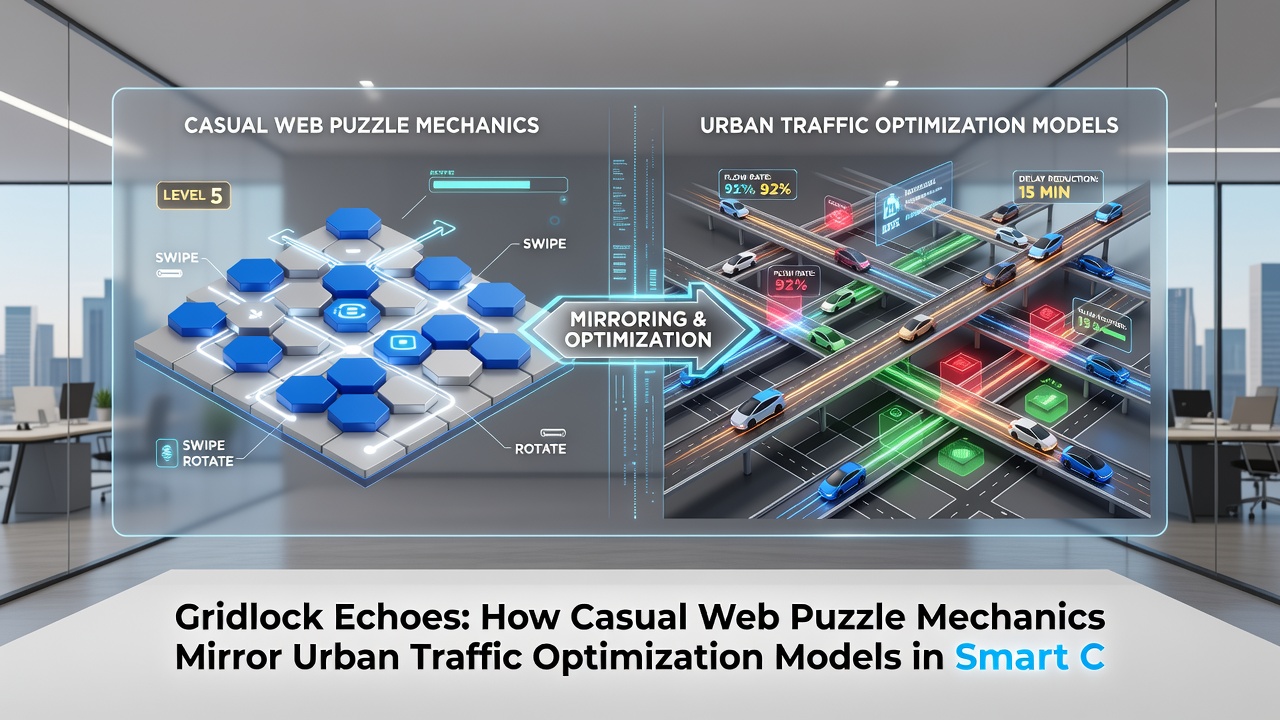
One European municipality that rolled out AI-assisted traffic orchestration in 2025 reported outcomes that aligned closely with performance metrics tracked in popular sliding puzzle applications, including faster resolution of temporary bottlenecks and lower overall system entropy; the software layers responsible for these results operate on the same priority queuing principles that puzzle designers use to maintain playability under increasing complexity. Analysts tracking these projects emphasize that the shared emphasis on reversible moves allows both virtual and physical networks to recover from disruptions without permanent rerouting.
Further evidence surfaces in Canadian smart corridor initiatives where real-time vehicle-to-infrastructure communication feeds models that anticipate gridlock points, much like the lookahead functions in web puzzles that highlight impending blocks before they occur. Figures released in June 2026 from ongoing monitoring programs confirm sustained alignment between the computational cost of puzzle solutions and the processing overhead of live traffic optimization, underscoring the transferable nature of these mechanics across domains.
Broader Implications for Modeling and Training
Training programs for traffic engineers have begun incorporating simplified puzzle interfaces to illustrate optimization trade-offs, allowing participants to manipulate variables in controlled digital settings that replicate the constraints of actual roadways; this approach draws on established findings from operations research showing that visual, interactive representations accelerate comprehension of flow dynamics. Universities examining these crossovers have published work detailing how puzzle-derived heuristics reduce computation time when scaled to citywide networks.
Industry groups focused on intelligent transportation systems continue to reference game-derived algorithms in technical documentation, noting that the compact state spaces of casual puzzles provide efficient testbeds for validating larger models before deployment. Such practices support iterative refinement across both fields without requiring full-scale physical trials at every stage.
Conclusion
The structural echoes between casual web puzzle mechanics and urban traffic optimization models persist across implementation scales because both domains solve identical classes of constrained movement problems using overlapping computational strategies; as smart city infrastructure expands through 2026 and beyond, continued examination of these parallels offers pathways for refining algorithms that serve millions of daily commuters while drawing on the accessible testing environments already present in browser-based formats.