Browser-based multiplayer puzzles spark real-time collaboration among strangers in HTML5 arcade formats
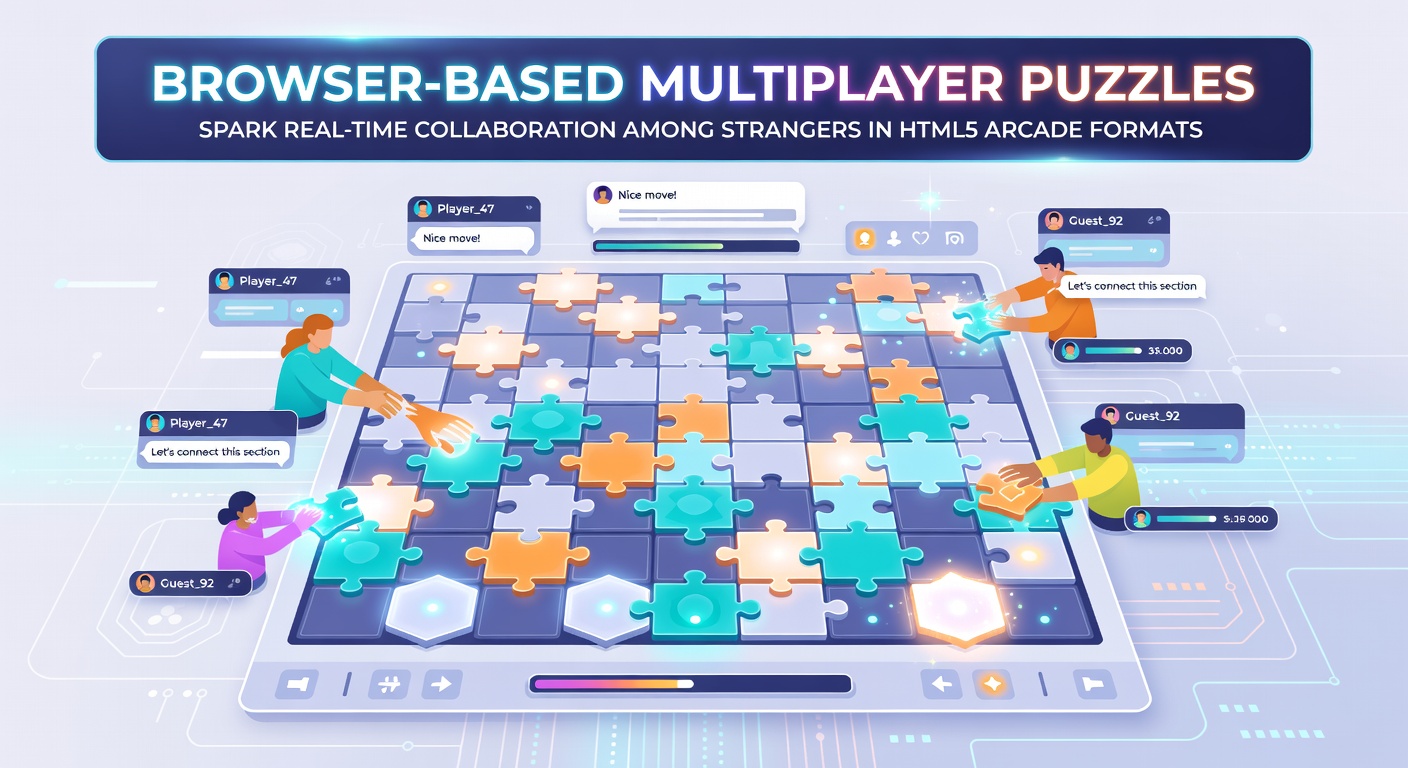 Browser-based multiplayer puzzles in HTML5 arcade formats enable strangers to form teams and tackle challenges together without downloads or accounts in many cases, and developers build these experiences using WebSockets for instant data exchange alongside canvas elements that render smooth animations across devices. Players enter shared lobbies where puzzle objectives appear on screen, and each participant manipulates objects or pieces that affect the collective progress, while timers and score counters update live for everyone involved. This format gained traction as HTML5 matured and replaced older plugin-dependent systems, allowing consistent performance on desktops, tablets, and mobile browsers alike.
Core Mechanics Driving Instant Teamwork
HTML5 arcade titles incorporate physics engines and synchronized state management so that one player's action registers immediately on others' screens, and this technical foundation supports puzzle types ranging from pattern matching to resource allocation tasks where timing matters. Observers note that games often include voice or text overlays built with WebRTC, which lets participants coordinate strategies mid-session without switching applications. Researchers have documented how these tools reduce setup friction and increase session lengths compared to traditional download-required platforms.
Take one case where developers integrated adaptive difficulty that scales based on group performance data collected in real time, and players discover they must communicate to overcome escalating obstacles like moving barriers or color-coded sequences. Data shows such features appear in multiple titles hosted on aggregator sites, and participation metrics from 2025 into May 2026 reflect steady growth in concurrent users during evening peak hours across time zones.
Examples of Active Platforms and Titles
Several free-to-access sites host HTML5 multiplayer puzzles that draw random pairings, and one popular variant challenges teams to assemble virtual machines under time pressure while sharing limited toolkits. Another series presents grid-based logic problems where strangers assign roles such as mover, rotator, or observer through simple click interfaces. These setups operate entirely within the browser tab, and progress saves automatically to temporary session IDs that expire after completion.

Industry reports from the Entertainment Software Association indicate rising interest in browser formats among casual audiences, and European research centers have tracked similar patterns through user surveys conducted in 2025. Players often report forming temporary alliances that dissolve once the puzzle clears, yet repeat encounters occur when matchmaking algorithms favor skill-matched groups.
Broader Patterns Observed in 2026
By May 2026, analytics platforms recorded thousands of daily sessions across puzzle-arcade hybrids, and many titles added spectator modes that let additional users watch and suggest moves via integrated chat. Developers respond to these trends by refining latency compensation techniques, which keep interactions fluid even on variable internet connections. Academic studies from institutions in Australia and Canada highlight how such environments foster short-term problem-solving skills transferable to other digital tasks.
One documented example involves a puzzle series where four strangers must balance virtual scales using color-coded weights, and success depends on verbal negotiation of each move before execution. Figures reveal average completion times drop when participants use the built-in hint system collaboratively rather than individually. This pattern repeats across genres because the underlying HTML5 framework supports rapid iteration by small teams of creators.
Conclusion
Browser-based multiplayer puzzles continue to expand the reach of HTML5 arcade formats by turning solitary problem solving into group efforts among people who start as complete strangers. Technical standards enable these interactions at scale, and ongoing updates to browser capabilities promise further refinements in synchronization and accessibility features. Participation data collected through May 2026 demonstrates sustained engagement, while examples from current titles illustrate practical implementations that prioritize immediate entry and shared progress tracking.